BioThane® vs Nylon: Which Dog Leash Material Lasts Longer in Real Life?
If you’ve ever stood in a pet store staring at a wall of colorful nylon leashes, you’ve probably wondered: Is this really the best option for a leash? Nylon has dominated the dog gear market for decades simply because it’s cheap and easy to manufacture — not because it’s the most durable or the most functional.
Over the past several years, a newer material has taken over the working-dog and adventure world: BioThane®. Trainers love it. Hikers love it. Rescue orgs love it. And everyday dog owners who are tired of smelly, fraying, soggy nylon leashes really love it.
But is BioThane actually better? And does it last longer?
Our team at Bolder K9 is going to break down BioThane® vs nylon in an honest, field-tested comparison so you can choose the best leash for your dog (and the best value for your wallet).

What Is Nylon? What Is BioThane®? (Quick Overview)
Nylon Leashes:
Nylon is made from woven synthetic fibers.
Pros: lightweight, cheap, comes in many colors.
Cons: absorbs water, collects odors, stretches, frays, holds bacteria, and degrades with UV exposure.
BioThane® Leashes:
BioThane® is a polyester webbing coated in a waterproof, non-porous polymer.
Pros: waterproof, odor-proof, easy to clean, extremely durable, comfortable handling, and high break strength.
Cons: slightly heavier than thin nylon (but still lightweight), higher upfront cost.
Now let’s break down how they compare in real-world use.

Durability: Which Material Actually Lasts Longer?
Nylon
Nylon leashes look fine when brand new — but they degrade quickly with real use.
Common nylon problems include:
- Fraying where the leash rubs
- Wear spots where the clip connects
- Fuzzing and thread pulling
- Weakening when wet
- UV damage over time
- Chewing damage within minutes
- Permanent stretching after pressure
A nylon leash used for daily walks often lasts 6–12 months before it needs to be replaced — sometimes sooner for strong pullers.
BioThane
BioThane is built differently. It has:
- A high-strength polyester core
- A protective waterproof coating
- A smooth, abrasion-resistant surface
- Zero stretch
- Superior break strength
BioThane leashes routinely last 3–5+ years even with hard daily use, hiking, mud, rain, or sun exposure.
Winner: BioThane®
It’s not even close. BioThane lasts exponentially longer.
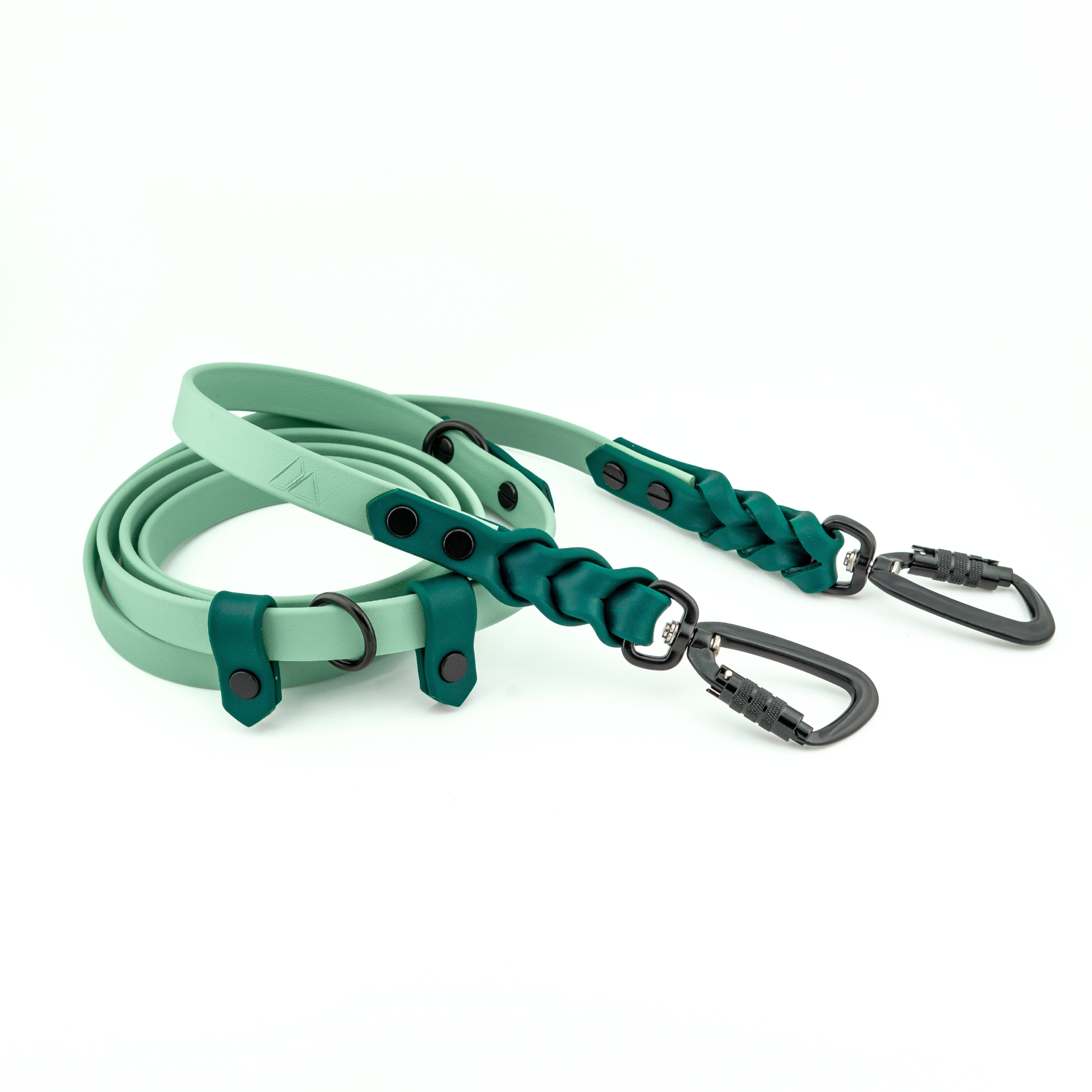
👉 Best durable option: Professional Sewn BioThane® Leash
Water Performance: What Happens When Things Get Wet?

You may not think it, but water can actually have a pretty significant effect on leash materials.
Nylon
Nylon absorbs water — lots of it.
That means:
- It gets heavier during rain
- It stays wet for hours
- It develops mildew
- It collects bacteria
- It grows a swampy smell over time
- It irritates hands when wet
If you hike, live in a rainy climate, or have a dog that loves water, nylon leashes get gross fast.
BioThane
BioThane is 100% waterproof.
It:
- Doesn’t absorb water
- Dries instantly
- Stays lightweight
- Doesn’t grow mildew
- Never smells
- Cleans off in seconds
Rain, mud, snow, beach — BioThane doesn’t care.
Winner: BioThane®
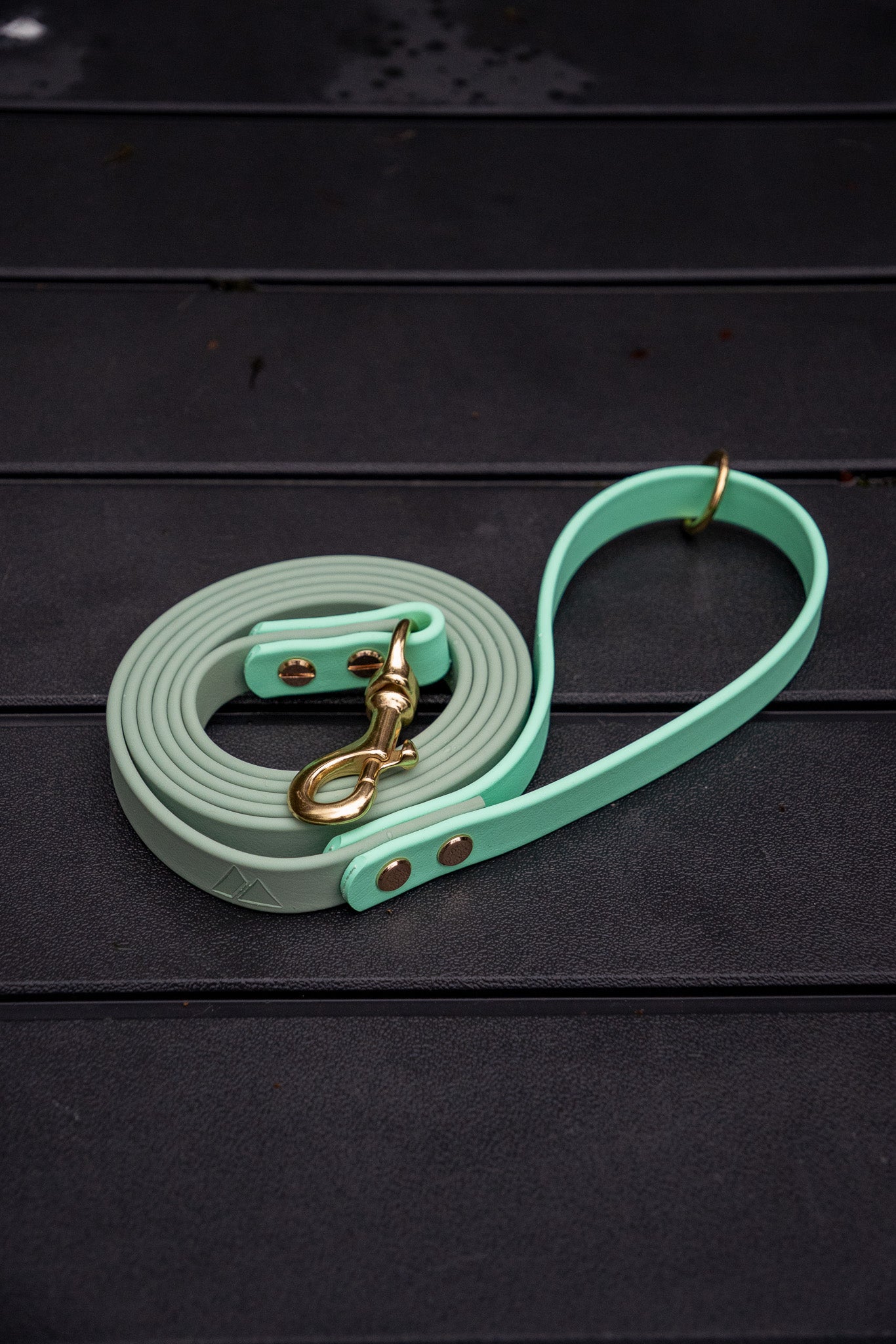
👉 Great for wet weather: Trailblazer BioThane® Leash
Odor & Bacteria Resistance
Nobody likes a smelly leash, and after consistent use in different climates and areas, this is a common problem amongst many options.
Nylon
Nylon traps:
- Skin oils
- Mud
- Dirt
- Bacteria
- Smells
- Moisture
You can wash a nylon leash, but the odor never fully goes away. After a few months of real use, most nylon leashes smell like “wet dog” permanently.
BioThane
BioThane is non-porous, so it cannot trap:
- Odors
- Bacteria
- Moisture
- Oils
One wipe and it’s like new.
Dogs that roll in gross things?
BioThane laughs in the face of filth.
Winner: BioThane®
👉 Easiest to clean collar: ECO Adjustable BioThane® Collar
Handling Feel: What Does It Actually Feel Like to Use?
How your leash handles is a very important aspect of choosing one.
Nylon
When dry, nylon feels okay.
When wet, nylon becomes:
- Slippery
- Rough
- Heavy
- Rope-burn prone
If your dog pulls suddenly, nylon can literally slice your hands.
BioThane
BioThane offers:
- A smooth, leather-like feel
- No rope burn
- Consistent grip
- Easy handling in rain
- Softer edges for comfort
- Controlled feedback
For strong pullers or reactive dogs, handling quality matters — a lot.
Winner: BioThane®
👉 Best grip: Pebble Grip BioThane® Leash
Strength: Which Material Holds Up Better Under Pressure?
Dogs can pull with some serious strength, so having a leash that is ready to handle that is crucial.
Nylon
Nylon weakens when:
- Wet
- UV-exposed
- Frayed
- Knotted
It stretches under pressure, which makes communication less consistent during training.
BioThane
BioThane has incredible break strength. Depending on width, BioThane can handle 500–1,000 lbs of force.
It doesn’t stretch, doesn’t weaken with water, and doesn’t degrade quickly in sunlight.
This is why working-dog handlers use it for:
- K9 training
- Protection work
- Tracking
- Long lines
- Reactive dog handling
Winner: BioThane®
Weather Resistance: Rain, Sun, Snow, Cold, Heat
Nylon Fails in Extremes:
- Gets stiff in cold
- Holds heat when left in sun
- Breaks down with UV exposure
- Stays wet after rain
- Freezes if soaked
- Melts under friction
BioThane Thrives in Extremes:
- Flexible in cold
- Doesn't absorb heat
- UV-stable
- Waterproof
- Easy to handle
- Doesn’t degrade in snow
If you live anywhere with seasons, BioThane is the clear winner.
Safety: Which Is Safer for You and Your Dog?
Safety is a huge consideration when it comes to a leash for your dog.
Nylon Risks:
- Rope burn
- Sudden snapping when frayed
- Dogs can chew through it
- Friction can injure hands
- Stretchiness reduces control
- Hardware often low-quality
BioThane Safety Benefits:
- Won’t fray
- Won’t snap under normal use
- Harder for dogs to chew
- Clear communication
- No burn injuries
- Perfect for strong breeds
Safety matters more than people think — especially with working breeds, high-drive dogs, or rescues.
BioThane wins again.
Cost Efficiency: Which Material Saves Money?
Nylon
Cheap to buy.
Expensive to own long-term.
Owners replace nylon leashes frequently.
BioThane
More expensive upfront.
MUCH cheaper long-term.
A BioThane leash lasts 3–5x longer than nylon.
That’s real savings.
Winner: BioThane®
Aesthetic Longevity: Which Looks Better Over Time?
Nylon:
- Colors fade
- Frays look ugly
- Stains set permanently
BioThane:
- Colors stay vivid
- Wipes clean
- Doesn’t fade noticeably
- Keeps a “new” look for years
If you want gear that stays good-looking, BioThane is the winner.
Final Verdict: BioThane® Outperforms Nylon in Every Category

Here’s the breakdown:
| Category | Winner |
| Durability | BioThane |
| Waterproofing | BioThane |
| Odor resistance | BioThane |
| Handling feel | BioThane |
| Safety | BioThane |
| Strength | BioThane |
| Cleaning | BioThane |
| Longevity | BioThane |
| Cost efficiency | BioThane |
| Aesthetics | BioThane |
BioThane isn’t a “luxury” upgrade —
It’s simply better in every meaningful way.
If you’re tired of replacing nylon leashes, dealing with bad smells, or burning your hands on walks, it’s time to upgrade.
Ready to Upgrade Your Dog’s Gear? Shop Bolder K9’s BioThane Collection
Explore the full lineup of waterproof, durable BioThane leashes and collars built for adventure, training, and daily structure:
👉 https://bolderk9.com/collections/leashes
👉 https://bolderk9.com/collections/collars
Be sure to check out Bolder K9 on Instagram!